
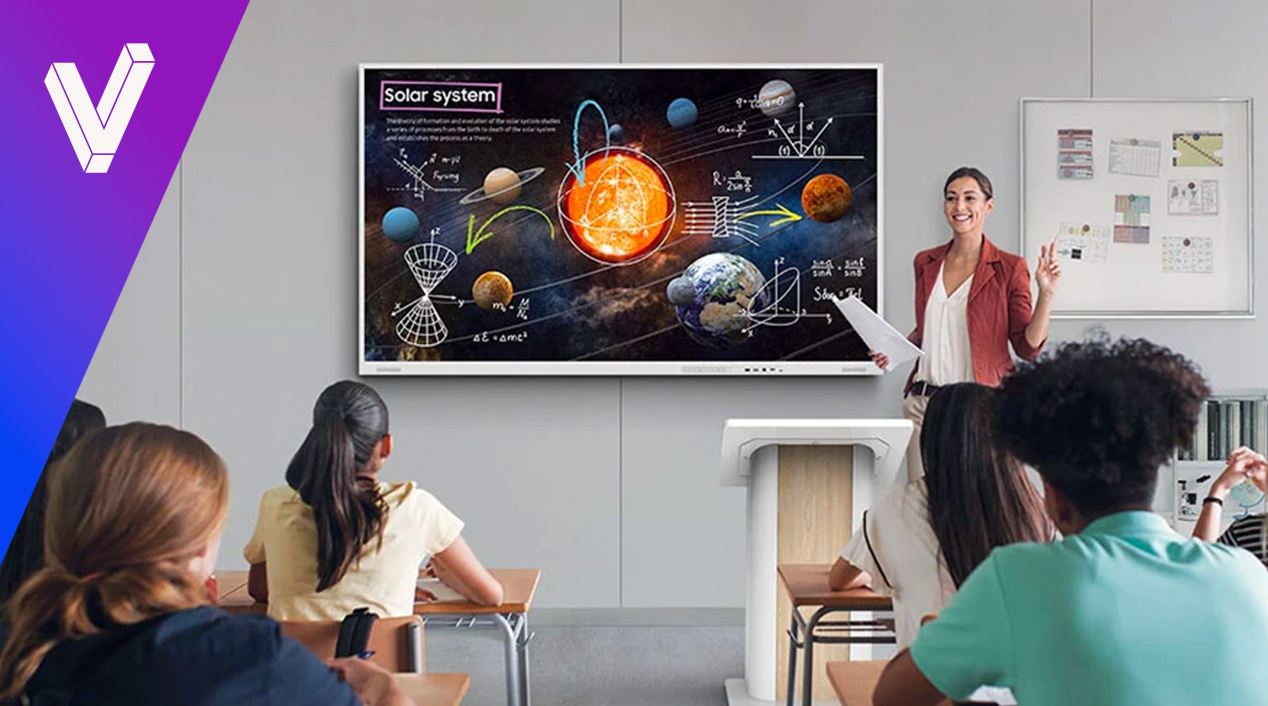

Walk into any classroom today, and you might find a familiar scene—a whiteboard filled with diagrams, notes scribbled in various colors, and a teacher erasing and rewriting as they go. But in more and more schools, that whiteboard is being replaced—or supplemented—by something far more dynamic: a digital board for teaching.
These sleek, touch-enabled, internet-connected displays are quickly gaining ground across classrooms around the world. They’re redefining what it means to teach, learn, and engage. But the question remains: Will digital boards replace whiteboards entirely? Or is there still a place for traditional tools in tomorrow’s classrooms?
To understand what the future holds, we need to look at the present—where both boards are coexisting—and explore how educators are leveraging digital innovation to enhance teaching. Interested in seeing how modern classrooms are already adapting? Take a closer look at this digital board for teaching.
The Rise of the Digital Board
The rise of the digital board didn’t happen overnight. It came from a growing demand for interactive, engaging, and flexible teaching tools that could meet the needs of today’s diverse and tech-savvy learners.
Digital boards offer features whiteboards simply can’t:
- Multimedia integration (videos, images, animations)
- Real-time annotations
- Interactive quizzes and polls
- Cloud connectivity for file sharing and storage
- Compatibility with tablets, smartphones, and laptops
Teachers no longer need to flip through textbooks, open multiple devices, or hand out printouts. Everything they need—from lesson plans to videos and worksheets—can be managed from a single screen.
More importantly, these boards allow students to actively participate, coming up to solve problems, draw, vote, or collaborate with peers directly on the board.
What Whiteboards Still Do Well
Despite the digital revolution, whiteboards still have their strengths. They’re inexpensive, low-maintenance, and intuitive. Any teacher can walk up, pick up a marker, and start teaching—no training required.
Whiteboards are especially useful in:
- Quick brainstorming sessions
- Small-group or impromptu discussions
- Backup during power outages or tech malfunctions
- Classrooms with limited budgets or access to infrastructure
Their simplicity is their superpower. For many educators, the whiteboard offers spontaneity and a tangible feel that’s hard to replicate digitally.
So, rather than being obsolete, whiteboards are often used in tandem with digital boards in hybrid classrooms—where the goal is to get the best of both worlds.
The Real Difference: Engagement and Learning Outcomes
Let’s get to the heart of the matter: Do digital boards make a measurable difference?
The answer is increasingly yes.
Research and educator feedback show that digital boards significantly boost student engagement, especially when used to:
- Show real-life simulations (science, math, geography)
- Run interactive assessments and live Q&As
- Allow collaborative content creation
- Replay lessons or review concepts on-demand
When students are involved, learning sticks. They’re not just listening—they’re doing, thinking, responding.
And for teachers, a digital board for classroom teaching simplifies tracking progress, managing attendance, and personalizing instruction—all in one place. Learn more about how it works with this digital board for classroom teaching.
Cost and Accessibility: The Main Roadblock?
One of the key challenges in replacing whiteboards entirely is cost. Not every school, especially in under-resourced areas, can afford to equip every classroom with a digital board.
However, that’s changing.
With increasing competition among EdTech providers and growing support from governments and educational institutions, digital boards are becoming more accessible than ever. Some platforms offer bundled software, cloud services, and training to make onboarding smoother and more affordable for schools.
Over time, as prices drop and demand increases, we can expect more institutions—urban and rural alike—to adopt digital boards as standard equipment.
Training the Teachers of Tomorrow
A powerful tool is only as effective as the hands that wield it. While students may take to technology like fish to water, teachers need support and training to make the most of digital boards.
Modern EdTech companies understand this and are increasingly offering:
- In-app tutorials
- Free webinars and demos
- On-site training during installations
- 24/7 customer support
The future of education lies not just in having better tools, but in empowering educators to use those tools confidently. As teacher tech literacy grows, the benefits of digital boards will only multiply.
Sustainability and Digital Transition
There’s also an environmental argument to be made. Whiteboards rely on markers that dry out quickly and contribute to plastic waste. Digital boards reduce the need for:
- Paper-based worksheets and handouts
- Frequent purchases of pens and markers
- Photocopying and printing
In this sense, digital boards are part of a larger shift toward sustainable, paperless classrooms—a goal that aligns well with 21st-century values.
So, Will Digital Boards Replace Whiteboards?
The answer isn’t a hard “yes” or “no.” The reality is more nuanced—and more exciting.
In many modern schools, digital boards are becoming the primary mode of teaching, especially for complex subjects, collaborative projects, or tech-integrated curriculums. But whiteboards continue to serve a supporting role, particularly in environments that value spontaneity and hands-on writing.
Over time, as costs go down and digital literacy rises, we’ll likely see digital boards replacing whiteboards in more institutions. But the transition isn’t just about swapping one tool for another—it’s about reimagining the classroom as a flexible, responsive, and student-centered environment.
Final Thoughts: The Board That Builds Better Learning
Ultimately, it’s not about the board itself—it’s about what happens because of it.
The shift from whiteboards to digital boards reflects something deeper: our commitment to engaging students in ways that are relevant, exciting, and inclusive. It’s about giving teachers the freedom to innovate and students the tools to collaborate, explore, and grow.
Whether you’re teaching in a remote village, a bustling city school, or a global online classroom, the tools you choose matter. And the digital board is proving to be more than a screen—it’s a window into the future of education.